
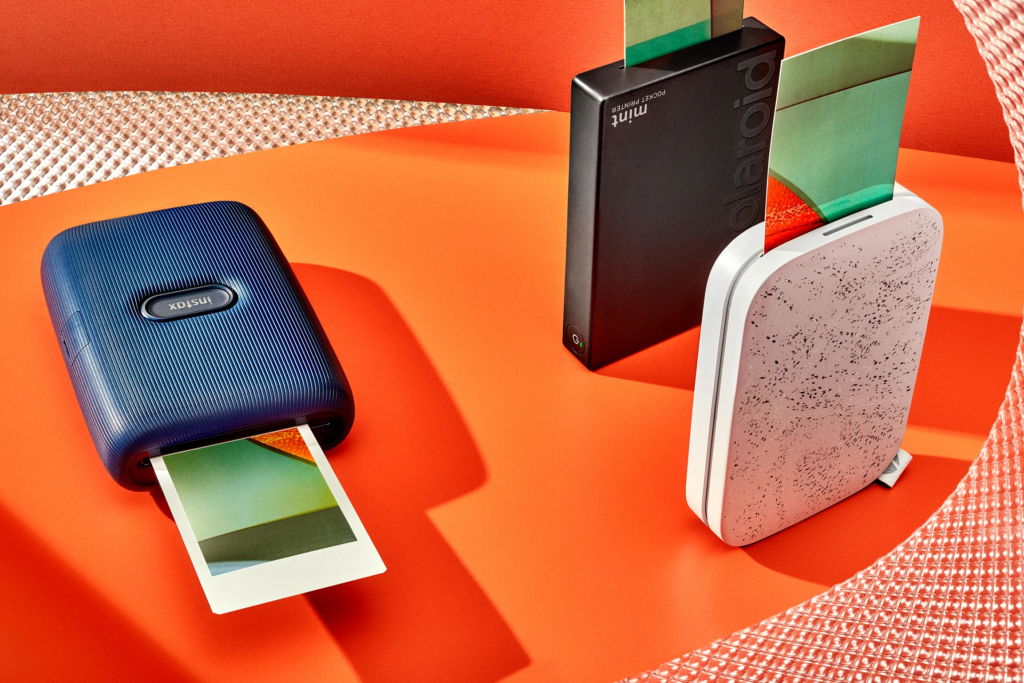
There’s something that a screen genuinely can’t replicate about holding a physical photo — which is why portable photo printers have gone from novelty gift item to genuinely useful everyday gadget for a growing number of people. Weddings, birthday parties, travel, family gatherings — any event where someone wants a real, tangible print to hand to someone rather than just texting them a JPEG is where these printers earn their place.
The most important thing to understand before buying is that “portable photo printer” actually covers three meaningfully different technologies, and the technology determines print quality, longevity, and ongoing cost more than any brand name does. Getting this right before comparing models saves a lot of post-purchase disappointment.
ZINK (Zero Ink) printers are the most compact and convenient — they use specially treated paper that develops color when heated, with no separate ink cartridges to buy. The convenience is real, but so is the trade-off: ZINK prints are noticeably less sharp and color-accurate than other technologies, and they’re more susceptible to fading over time. For fun, casual prints to stick on a notebook or hand out at a party, ZINK is perfectly fine. For photos you want to keep and display for years, it’s the weakest option.
Dye-sublimation printers transfer color dyes onto the paper through a heated ribbon, producing prints that are sharper, more accurate in color, water-resistant, and significantly more durable than ZINK. The trade-off is slightly larger size and a higher cost-per-print because the ribbon and paper are sold together — wasting one wastes the other. For anyone who wants prints that genuinely look like lab prints rather than slightly washed-out sticker-style photos, dye-sublimation is the right choice.
Instant film printers — from Fujifilm’s Instax line — use real photographic film that develops in the light after ejecting from the printer. They produce prints with a characteristic analog look and feel that no digital printing technology fully replicates, and the tactile experience of watching a print slowly develop is genuinely unique. Per-print cost is higher than ZINK or dye-sub, and you’re locked into Fujifilm’s film format. For buyers who specifically love that instant camera aesthetic, this is the pick.
Print size is the final practical consideration, since it determines what you can actually do with the output. Pocket-sized ZINK printers typically produce 2×3-inch prints — roughly credit card size, great for stickers and small mementos. Dye-sub models typically hit 3×4 inches or a full 4×6-inch photo, which is actual standard print size suitable for framing and albums. Square format printers produce prints sized for Instagram-style sharing and journaling.
Here’s a quick side-by-side before the full breakdown of each pick.
| Product | Technology | Print Size | Battery | Best For |
|---|---|---|---|---|
| Polaroid Hi-Print | ZINK (dye-sub hybrid) | 2×3 inch | ~40 prints | Best overall pocket photo printer for fun and sharing |
| Canon Selphy CP1500 | Dye-sublimation | 4×6 inch | ~108 prints per ribbon | Best lab-quality 4×6 prints on the go |
| Fujifilm Instax Mini Link+ | Instant film | 2.4×1.8 inch | ~100 prints | Best for the classic instant film look and experience |
| Canon Selphy QX20 | Dye-sublimation | 3.4×3.4 inch (square) | ~20 prints per charge | Best for square prints for social media and journaling |
| Kodak Step Slim | ZINK | 2×3 inch | ~25 prints | Best ultra-compact budget pick for casual printing |
Polaroid Hi-Print
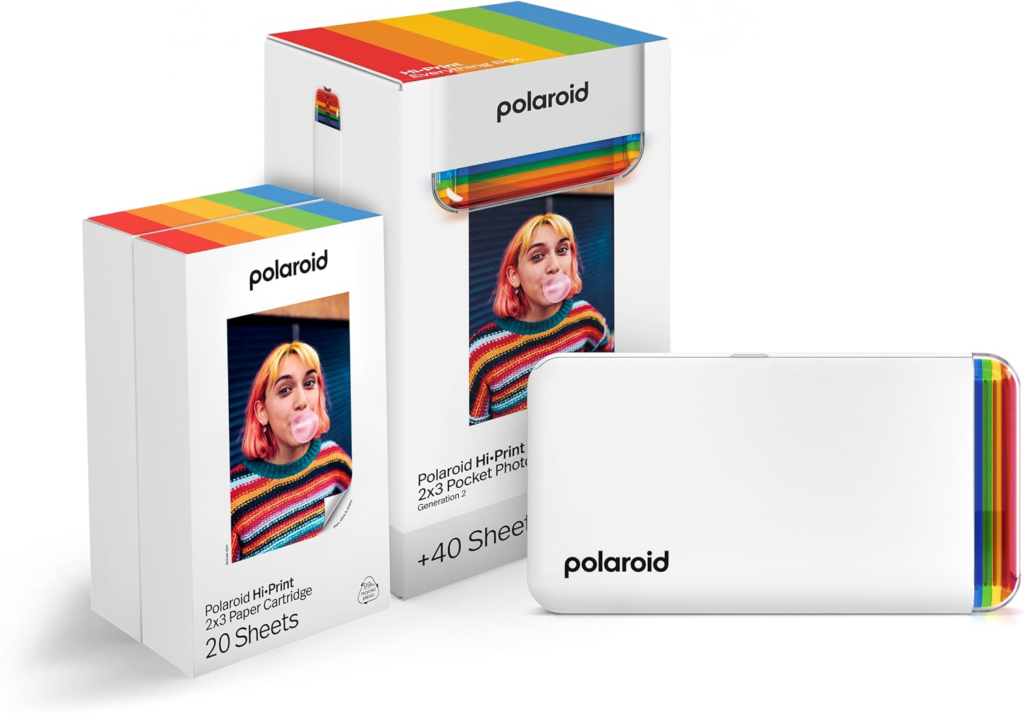
Reviewed.com named this their top portable photo printer, and the combination of crisp prints, an easy-to-use app, and the Polaroid brand’s built-in appeal makes it the most well-rounded pocket printer for casual everyday use. Despite being ZINK-based, it delivers noticeably better color fidelity than most ZINK competitors, with the main trade-off being a tendency to slightly desaturate the brightest colors — something easily addressed by bumping saturation before printing in the app. The 2×3-inch print size is the standard for pocket printers: genuinely pocketable and great for handing out at events, but not the right tool for framed keepsake photos. App support is strong, with a large template and editing selection that makes it more creative-friendly than basic ZINK alternatives.
Best for: most buyers who want a fun, casual pocket printer for parties, travel, and everyday photo sharing.
Canon Selphy CP1500
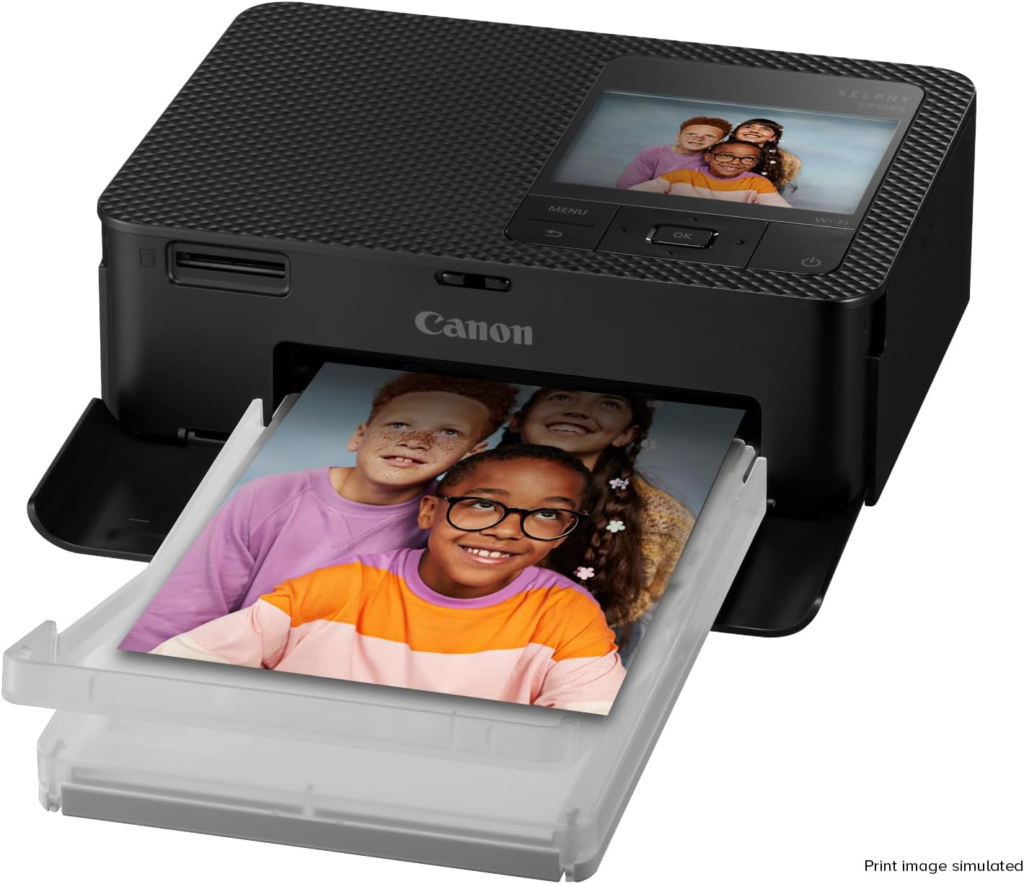
For buyers who want prints that actually look like photographs rather than fun party souvenirs, the Selphy CP1500 is the standard recommendation across multiple review sources including PhotoWorkout and PropelRC. Its dye-sublimation process delivers 4×6 prints with lab-like color accuracy, water resistance, and durability that ZINK simply can’t match — prints that are suitable for framing, albums, and genuine keepsake use rather than just handing out and sticking places. Each ribbon-and-paper kit covers around 108 prints, and the per-print cost is reasonable compared to the quality delivered. The trade-off for that output quality is size — the CP1500 is larger than pocket ZINK printers and is more accurately described as a compact portable printer than a pocketable one, better suited to travel bags than coat pockets.
Best for: buyers who want genuine lab-quality 4×6 photo prints for albums, framing, and keepsake use.
Fujifilm Instax Mini Link+
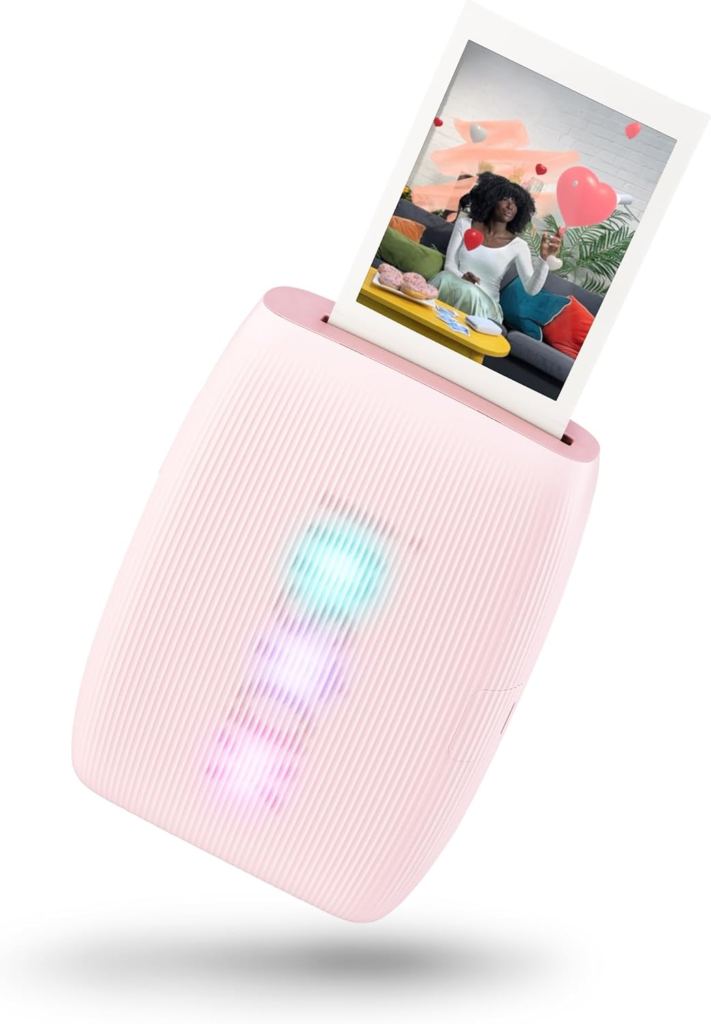
Digital Camera World’s reviewer specifically called the Mini Link+ the best Instax portable printer they’ve tested, noting the best color quality from an instant film printer seen so far. The appeal here is fundamentally different from dye-sub or ZINK printing — real instant film develops in your hands after printing, producing prints with the characteristic warm, slightly soft look that defines the Instax aesthetic and feels genuinely distinct from any digital printing process.
The Instax Mini app includes filters, frames, and creative tools that expand what you can do beyond a straight photo print. Per-print cost is higher than other options here since you’re buying actual film cartridges, and the print size is small — Instax Mini format is roughly 2.4×1.8 inches. If the instant film experience is what you’re after, though, nothing else replicates it.
Best for: buyers who specifically want the classic instant film look, feel, and experience rather than digital photo printing.
Canon Selphy QX20
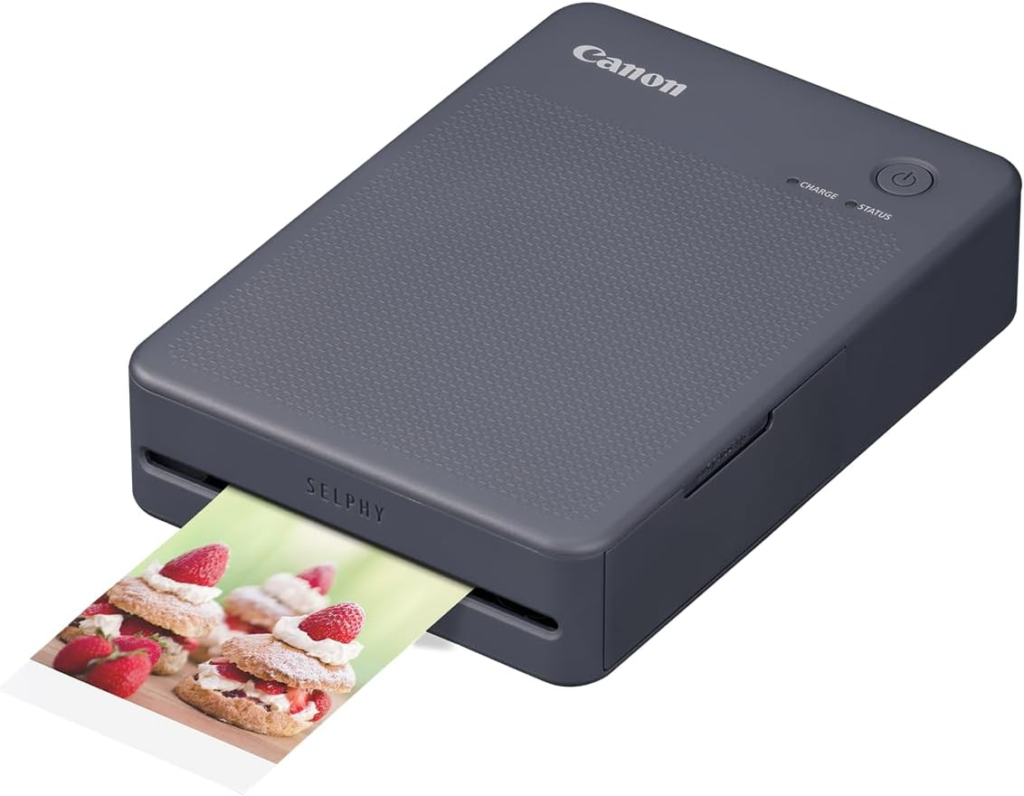
This is the pick for the specific use case of square prints — social media-sized output for Instagram-style sharing, journaling, scrapbooking, and planners. Digital Camera World’s reviewer specifically praised the color quality and detail of QX20 prints, noting better-than-expected vibrancy for a dye-sub printer at this size.
The square format is genuinely different from standard photo sizes, and for buyers who’ve built creative workflows around that format — travel journals, visual diaries, event books — having a portable printer that outputs the right shape without cropping is a real practical advantage. Battery life is the area to manage expectations on: approximately 20 prints per charge means you’ll want the charging cable handy for longer printing sessions at an event.
Best for: journalers, scrapbookers, and social media creators who specifically want square format prints.
Kodak Step Slim
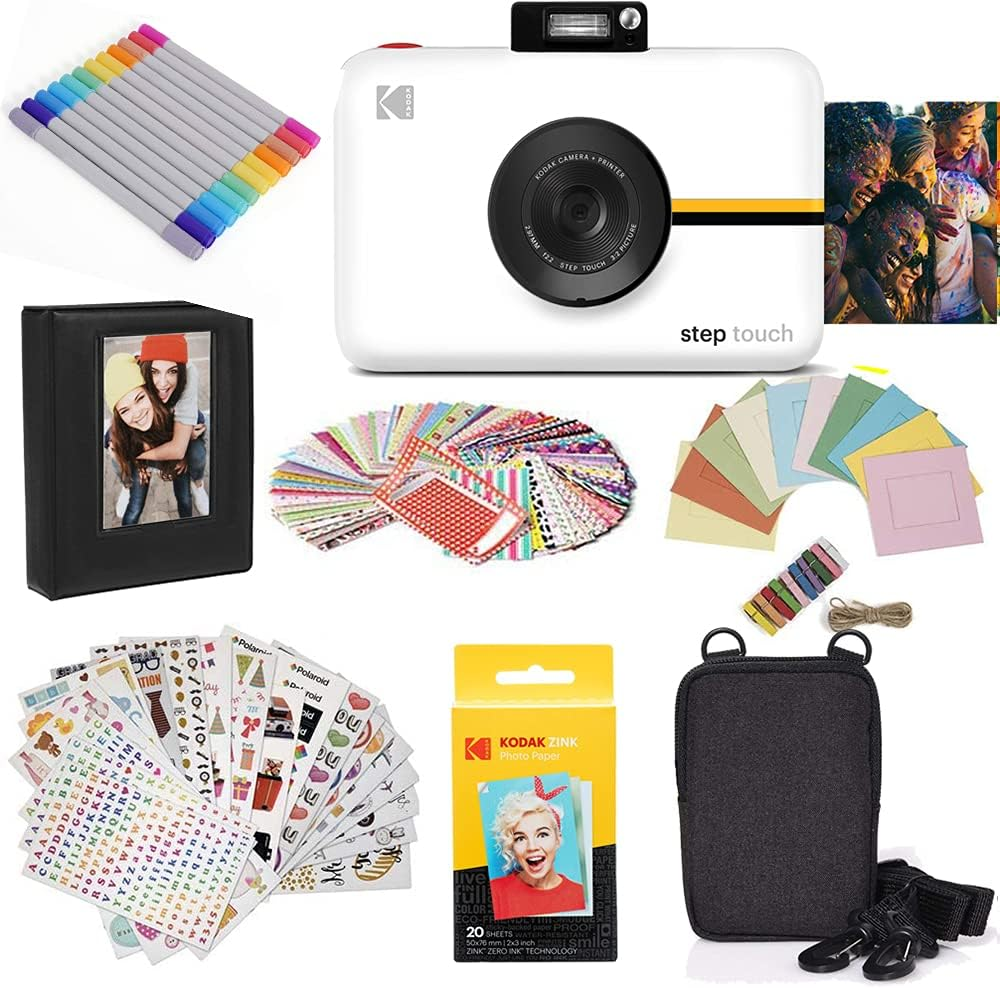
This is the ultra-compact budget pick for buyers who want the smallest possible footprint and the lowest upfront price, and the Reviewed.com team noted its credit card-sized 4.5x3x1-inch body as genuinely remarkable for how little space it takes. ZINK technology keeps the running costs lower than film-based options, setup through the Kodak Step app is straightforward, and the 2×3-inch prints are fast.
The honest trade-off is print quality: ZINK prints are noticeably softer and less color-accurate than dye-sub or film alternatives, and battery life covers around 25 prints per charge before needing a USB-C recharge. For a casual gift, a first portable printer, or occasional party use where fun matters more than archival quality, it delivers what it promises at a price that’s easy to justify.
Best for: budget buyers who want the smallest, most pocketable photo printer for casual and occasional use.
Frequently Asked Questions
What’s the real difference between ZINK, dye-sublimation, and instant film for portable printers? ZINK uses chemically treated paper that develops color through heat with no ink cartridges, producing convenient but less sharp and less durable prints. Dye-sublimation transfers color dyes through a heated ribbon for sharper, more color-accurate, and water-resistant prints closer to lab quality. Instant film uses real photographic film that develops in light, producing the characteristic analog look that digital printing can’t fully replicate.
Are portable photo printer prints durable enough for framing and albums? Dye-sublimation prints are genuinely durable, water-resistant, and suitable for framing and albums. ZINK prints are more susceptible to fading over time and less suitable for long-term display. Instant film prints have a different kind of longevity — they develop a characteristic patina over time rather than fading uniformly, which is part of their appeal for many buyers.
How much does it actually cost per print with a portable photo printer? It varies significantly by technology: ZINK paper is typically the lowest upfront cost per sheet but produces lower quality results. Dye-sublimation ribbon-and-paper kits cost slightly more per print but deliver better quality, and waste occurs when ribbon and paper counts don’t match exactly. Instant film is typically the highest cost per print since you’re buying actual photographic film cartridges. Calculating the true per-print cost including supplies is worth doing before comparing printer prices alone.
Do portable photo printers work with both iPhone and Android? Most current models include companion apps available for both iOS and Android, and connectivity is typically via Bluetooth with some models also supporting Wi-Fi. Always check the specific compatibility listing for a model if you’re on a less common device, since app support occasionally lags on Android for some brands.
Is a 2×3-inch print the same as a standard photo size? No — standard photo sizes are 4×6 inches, which is what most people picture as a “normal” print. The 2×3-inch format common in pocket ZINK printers is roughly credit card-sized, which is great for sharing and sticking but not suitable for framing or album pages designed for standard prints. If standard photo sizing matters, look specifically at 4×6 dye-sublimation models.
Can I use any photo paper with my portable photo printer, or does it have to be brand-specific? Most portable photo printers require brand-specific paper or film — ZINK paper, Instax film, and dye-sub ribbon kits are all proprietary formats that only work with their matching printer systems. This is the main ongoing cost to factor in, and third-party alternatives vary widely in compatibility and quality.
Are portable photo printers good gifts? Yes, consistently — they tend to be perceived as more thoughtful and creative than generic tech gifts because they produce something tangible. The film and paper refills that follow also make for easy follow-up gifts. For teens, families with young children, or anyone who loves travel and memory-keeping, they’re among the better gift ideas in this price range.
How long does it take to print a photo with a portable photo printer? It depends on the technology — ZINK printers typically produce a print in under a minute. Dye-sublimation takes slightly longer, usually one to two minutes per print as the ribbon passes over the paper multiple times. Instax film ejects almost immediately but then takes one to three minutes to fully develop, which is part of the experience rather than a wait time.
The right portable photo printer comes down to matching the printing technology to what you actually want from the output — casual fun prints for a party, keepsake-quality 4x6s for an album, or the specific instant film aesthetic that nothing digital fully replaces. Double check current pricing and available paper bundles on Amazon before buying, since starter kits and supply packs frequently go on sale together.
This article contains affiliate links.